
Array of Solutions Explains What is a French Drain System

Table of Contents

Curious what is a French Drain System and how a simple trench can protect your home’s foundation and indoor air for years?

I’m Douglas Ray Whitehead, owner of Array of Solutions in Greenville, SC. I answer every call and handle each email personally. Since 2007 we’ve helped homeowners and businesses prevent water and mold problems with practical, long‑lasting work.

The idea is plain: a perforated pipe wrapped in fabric sits in gravel inside a trench. That setup gives subsurface water a clear way out by gravity. Proper slope, the right gravel size, and filtration keep soil from clogging the path. When gravity won’t do the job, discharge to a sump pit and pump works well.

We focus on low‑impact installations that reduce moisture at the base of your foundation, limit pressure on walls, and cut mold risk. Call me at (864) 710-6413 or email scmoldremoval@gmail.com for a straight assessment and a transferable workmanship warranty.

Key Takeaways

  • A trench with perforated pipe and gravel moves water away from your property.
  • Proper slope and filtration prevent clogging and extend performance.
  • Good design lowers foundation pressure and indoor moisture risks.
  • Array of Solutions offers personal care and long‑term warranties.
  • When gravity fails, a sump pit and pump provide reliable discharge.

Why Groundwater Control Matters for Homes, Basements, and Foundations

Subsurface water quietly pushes against foundations, and unchecked flow can cause real damage. Left to build up, hydrostatic pressure forces moisture into basements and through tiny gaps in walls and slabs.

Controlling that pressure protects structure and indoor air. A well‑placed french drain gives groundwater a controlled way out of soil near the foundation. That simple path reduces leaks, standing water, and the risk of flooding inside finished spaces.

  • Water in low areas moves through soil and loads foundation walls; relief prevents crack growth.
  • Proper routing keeps basements drier, cuts mold risk, and stops erosion under footings.
  • On clay soils, drainage lowers the water table faster and eases cyclic wetting that shortens service life.

I personally walk clients in Greenville, SC through options so families and businesses get the least‑invasive solution. Call (864) 710-6413 or email scmoldremoval@gmail.com for an on‑site review and a plan tailored to your property.
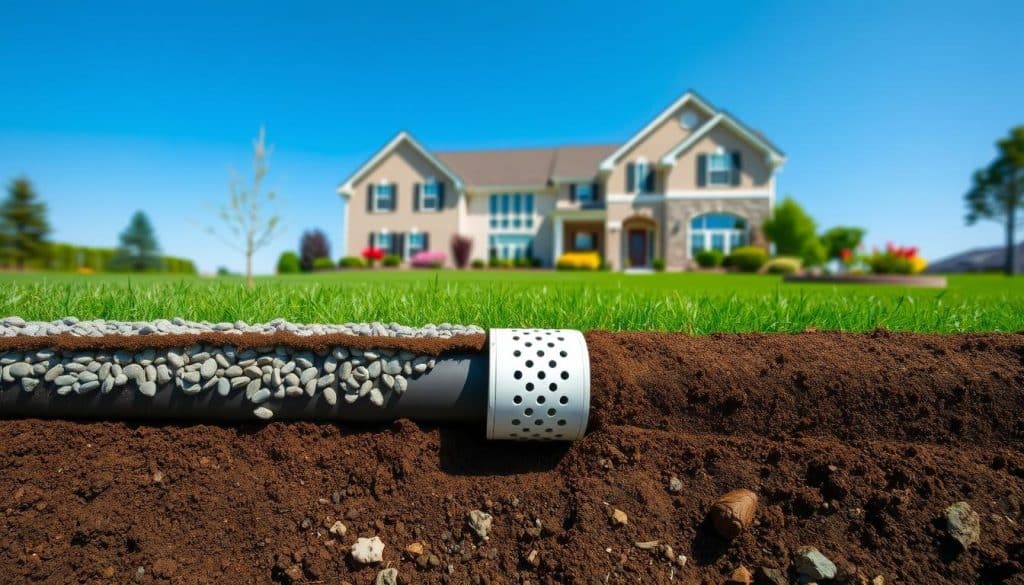
A detailed, high-quality illustration of a French drain system, showcasing its components. In the foreground, display a cross-section of a French drain, with gravel layers, a perforated pipe, and surrounding soil. The middle ground features a well-maintained yard with grass and decorative plants, indicating proper drainage and landscaping. In the background, a residential home stands under clear blue skies, emphasizing a suburban setting. Use natural daylight to create a bright, inviting atmosphere, highlighting the functionality of the system. Focus on realistic textures, like the roughness of gravel and smoothness of the pipe. Capture the scene from a slightly elevated angle for a comprehensive view, ensuring no people or text are included.

What is a french drain system

Directing groundwater into a buried pipe reduces load on foundations and keeps interior spaces drier. In our field work, we pair practical design with low‑impact installation so homeowners get lasting protection without needless disruption.

How it works: gravity, path of least resistance, and relieving hydrostatic pressure

Gravity moves water through loose gravel into the perforated pipe. The pipe follows the path of least resistance and carries water to a safe outlet or a sump pit when gravity alone won’t reach daylight.

Core components: perforated pipe, gravel envelope, and water‑permeable fabric

The setup is simple: a perforated pipe sits inside a gravel envelope that keeps voids for water flow. A water‑permeable fabric wraps the gravel to hold soil fines back and slow clogging.

Where it’s used: yards, around foundations, retaining walls, and interior drains with sumps

  1. Perimeter installs (weeping tile) that lower pressure at basement walls.
  2. Surface yard drains and runs behind retaining walls to cut lateral load.
  3. Interior trenches that lead to a sump pit and pump when an outside outlet isn’t available.

Design notes: We keep trenches sloped about 1″ per 8′ and choose gravel, pipe type, and filtration based on soil. In fine soils, engineered sand filters may replace standard fabric to preserve long‑term capacity.

Assessing Your Property and Designing the Right Drain

A careful walkaround reveals where water finds its way and where fixes will work best.

Signs you need help: recurring puddles, soggy lawn patches, musty odors in basements, visible cracks in walls or foundation, and repeat leaks point to poor surface and subsurface drainage.

Our on‑site review in Greenville, SC and nearby areas maps low spots, flow paths, and utility locations before any trenching begins. We test soil infiltration and note grades so the proposed design matches real conditions on your property.

  1. Site checks: mark flow lines, identify collection areas, and confirm utility locates.
  2. Specs that guide work: typical trench depths are 18–24 inches and widths 6–12 inches; we aim for about 1″ fall per 8′ to keep reliable water flow without over‑excavation.
  3. Pipe and filter choices: select drainage pipe type and perforation orientation to suit soil and gravel, and choose fabric or engineered filters to limit fines and extend service life.
  4. Discharge planning: route to daylight at a safe grade when possible, or tie to a sump pit and pump if gravity outlets aren’t available.

We start by listening and then show you the least‑invasive options. You’ll receive a clear plan and estimate that explain each specification and how it solves the problems you see, backed by our transferable workmanship warranty.

A landscape view of a residential property being assessed for drainage solutions. In the foreground, a professional in a smart casual outfit examines the ground with a measuring tool, focused on the soil and the layout of the yard. In the middle ground, a well-maintained garden with various plants and a partially visible trench illustrates an ongoing drainage project, showing the French drain system being designed. The background features a clear blue sky and a few scattered clouds, with a hint of a home peeking through the greenery, creating a serene atmosphere. Soft natural lighting enhances the details of the landscape, while a slight angle from above captures the assessment process effectively, emphasizing the importance of proper drainage design.

How to Install a French Drain Step by Step

A good installation starts on paper: mark the route that captures flow, call utility locates, and confirm local permits before work begins. I guide the crew on-site so the job stays clean and low‑impact.

Excavation and slope

Dig a trench 8–24 inches deep and 6–12 inches wide. Keep a steady fall of about 1 inch per 8 feet so water never stalls.

Lining, gravel, and pipe

Line the trench with geotextile fabric or an engineered sand filter to block debris and fines. Add a 3/4–1 1/2 inch gravel bed, set the perforated pipe, then cover with more gravel.

Connections and finish

  1. Attach fittings and protect the outlet with a grate or splash basin.
  2. Wrap fabric over the gravel, then backfill with topsoil or decorative stone.
  3. For basements, install weeping tile to a sump pit and pump sized for your home.

Maintenance tip: check outlets yearly and flush pipes if flow slows. Proper materials and careful slope deliver long service with minimal disruption.

Maintenance, Performance, and Longevity

A yearly tune-up keeps water moving and protects foundations without major excavation. Regular maintenance spots small problems early and saves time and money later.

Plan a quick annual walk-through to check the outlet and clear leaves or debris that block discharge. Watch for settlement or small depressions that can change slope and slow flow.

  • Confirm water exits freely at the discharge point; remove surface debris and clear grates.
  • Inspect for lost grade and restore soil where needed to keep steady flow.
  • If flow slows, we can jet pipes with pressurized water to remove fines without digging.
  • Fabric‑wrapped runs may need localized replacement in 5–10 years in fine soils; engineered filters resist clogging longer.
  • With routine care, this work commonly lasts 20–30 years or more and reduces foundation stress.

We design for low maintenance and show you how to keep drains performing. If you prefer, I can schedule annual checks and handle any service in Greenville, SC and nearby areas.

Costs, Value, and When to Call Array of Solutions

Budget clarity makes it easier to choose the right scope and materials for a project. Below I summarize typical ranges and the long‑term value you should expect for foundation protection and yard repair.

Typical budgets

Exterior installs commonly run $10–$50 per linear foot. Interior work generally falls between $40–$100 per foot because of membranes and slab access. Many projects average about $5,000; complex interior jobs can approach $18,000.

Benefits beyond dryness

A well‑designed drain reduces hydrostatic pressure on the foundation, lowers basement seepage, and cuts erosion around footings. That protects against cracks, improves yard usability, and supports healthier indoor air by reducing mold risk.

When to call

  • We provide clear budgets up front and explain how length, depth, access, and discharge affect cost.
  • We specify durable components from the drainage pipe to outlet protection to match your soil and property.
  • If your building shows musty odors, wall stains, or other water problems, call for a targeted plan.

You’ll speak with me, Douglas Ray Whitehead, every time. Since 2007 we’ve completed 1,000+ inspections and hundreds of remediations across Greenville, SC and nearby areas. For a fair, transparent plan call (864) 710-6413 or email scmoldremoval@gmail.com.
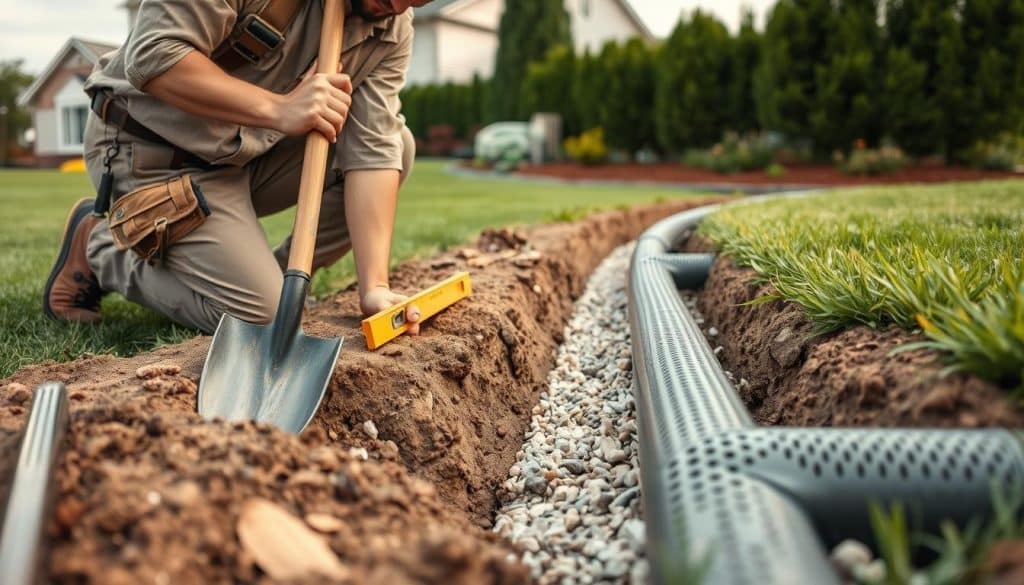
A professional contractor in modest work attire kneels beside a freshly dug trench, expertly installing a French drain system. The foreground features tools such as a shovel and a level, emphasizing the detailed installation process. In the middle ground, the trench is lined with gravel and perforated pipe, indicating the step-by-step method of installation. The background showcases a residential property with lush green grass and a clear sky, providing a serene setting. Soft, natural lighting casts gentle shadows, creating a realistic atmosphere. The angle captures both the contractor’s focused expression and the intricate layout of the French drain, conveying a sense of professionalism and expertise in home improvement.

Conclusion

Final thoughts: A properly designed french drain gives water a predictable way out of the ground and reduces pressure at the foundation. With the right trench slope, clean gravel, and proper filtration, soil stays out of the pipe and the job performs for decades.

Routine maintenance keeps outlets clear so water moves away from your home and basement during heavy rain. Discharge to daylight or to a sump with tile and pump ensures reliable exit when gravity alone won’t do the work.

I stand behind every recommendation and installation at Array of Solutions. You’ll always deal directly with me, and our transferable workmanship warranty protects your property and peace of mind. For help in Greenville, SC and surrounding areas call (864) 710-6413 or email scmoldremoval@gmail.com.
FAQ

What does Array of Solutions explain about a French drain system?

We describe a subsurface path that redirects groundwater away from vulnerable areas. It uses perforated pipe set in a gravel envelope and wrapped with water‑permeable fabric to channel water by gravity, reducing hydrostatic pressure on foundations and finished spaces.

Why does groundwater control matter for homes, basements, and foundations?

Controlling groundwater prevents seepage, wall cracks, mold growth, and soil erosion. Proper drainage protects structural integrity, preserves indoor air quality, and reduces costly repairs over time.

How does this type of drain work to relieve pressure?

Water follows the path of least resistance. The perforated pipe collects subsurface water; gravel lets water flow freely to the pipe; fabric keeps fines out. Collected water moves by gravity or is sent to a sump or daylight outlet, lowering hydrostatic pressure against walls and slabs.

What are the core components I should know about?

Key parts include a perforated drainage pipe, an envelope of clean gravel or stone, and geotextile fabric to filter sediment. Proper slope, outlet protection, and occasional cleanouts complete the design.

Where are these drains commonly used?

They’re installed around perimeter foundations, behind retaining walls, beneath patios, in soggy yards, and as interior basement drains tied to sump pumps. They work wherever subsurface water threatens structures or landscapes.

What signs indicate my property needs a drain?

Look for standing water, persistently wet lawns, basement leaks or damp walls, interior mildew or musty odors, and hairline cracks in foundation walls or slabs.

How do you assess a site before installation?

We map natural flow paths and low points, check soil type and permeability, locate utilities, and determine the best discharge point. This ensures correct trench placement, depth, and slope for reliable performance.

Which specifications matter when designing the trench and pipe?

Trench width and depth, slope (target roughly 1 inch fall per 8 feet), pipe diameter and perforation orientation, and the stone gradation control capacity and longevity. These specs depend on load, soil, and expected flow.

Where can collected water be discharged?

Options include daylight to a lower grade, a storm sewer (with permits), or a sump pit paired with a pump. The choice depends on site constraints, local code, and property layout.

What are the basic steps to install one of these drains?

The process includes route layout and permits, excavation to proper depth and slope, placing geotextile fabric, installing pipe and stone, wrapping the assembly, and backfilling with suitable material before final grading or surfacing.

How deep and steep should the trench be?

Typical depths range from 8 to 24 inches for yard drains; deeper trenches may be needed near foundations. Maintain a consistent fall—about 1 inch per 8 feet—unless local conditions call for adjustments.

What fabric and stone choices work best?

Use nonwoven geotextile fabric rated for filtration and separation. Clean, angular crushed stone or pea gravel sized to allow free flow while preventing compaction works best. Avoid fines that clog the assembly.

How do interior installs differ from exterior ones?

Interior installs often tie to a sump pump and use perforated pipe or weeping tile adjacent to footings. Exterior systems rely on gravity discharge more often and require careful grading and outlet planning.

What maintenance keeps a drain performing well?

Perform annual visual checks, clear outlet points, inspect for silt buildup, and ensure surrounding grades remain intact. Periodic flushing or professional camera inspection can detect blockages before failure.

How long do these systems typically last?

With quality materials and installation, drains can last decades. Fabric degradation, sediment migration, or mechanical damage can shorten life; proactive maintenance extends serviceability.

What does a typical project cost and how is value measured?

Costs vary with length, depth, interior vs. exterior work, and site complexity. Consider per‑linear‑foot ranges and the value of avoided foundation repairs, erosion control, and mold remediation when evaluating return on investment.

When should I call Array of Solutions for help?

Call us when you see persistent moisture, basement dampness, recurring mold, or visible foundation movement. We perform site assessments, design appropriate drainage, and provide transparent estimates for Greenville, SC and surrounding areas.

Who can I contact at Array of Solutions for direct assistance?

Talk directly with Douglas Ray Whitehead at Array of Solutions: (864) 710-6413 or scmoldremoval@gmail.com. We’re environmental consultants since 2007 and back our work with a transferable workmanship warranty.

Handling All Of Your Water & Property Damage Emergencies

We are the nation’s premier source for Mold Inspection and Mold Testing. All our mold inspectors are board certified, highly skilled, and experienced mold service professionals

Air Quality Testing

Air quality testing can tell you whether you have a mold problem even if you cannot find the evidence mold growth. We test air samples from your home or business for the concentration of mold spores. Samples are taken from the air and are later examined under a microscope in our labs.

Water Damage Repair

Our water extraction equipment will remove the majority of the water from the affected area(s) including carpets and upholstery. After that we use industrial fans, desiccant drying equipment and dehumidifiers to rapidly dry the still wet areas. We then use a HEPA filtered vacuum to clean up.

Mold Inspections

We visually inspect to pinpoint the problem areas in your home or business. we then try to pinpoint the source of the moisture which is most likely the reason that you may have a mold problem. Swabs and air samples will be taken to our laboratory for analysis and recommendations for remediation.

Mold removal

The source of the water must be identified and corrected . All wet materials (including carpets and upholstery) must be dried completely. Removal of all items including furniture from the infected area. Contaminated area must be sealed off from the rest of the property. Mold growth on surfaces is sanded and cleaned. Contained area must be completely dried, filtered and fumigated

Post Mold Remediation

After mold had been removed, Post Remediation Verification Inspection (PRVI) can assure that the mold cleanup has been done correctly and effectively in the work area and confirm that the cleanup did not accidentally distribute high levels of moldy dust and debris into other areas of the building or into its mechanical systems such as heating or air conditioning systems.

Insurance Handling

Home insurance companies usually don't cover mold damage unless it's directly related to a "covered peril" such as Fire; Lightning; Vandalism or malicious mischief; Damage caused by vehicles; Theft; Falling objects; Weight of ice, snow, or sleet; Accidental discharge or overflow of water or steam; Frozen pipes. Our experts will assist you in filling the insurance claim.

Mold Removal

Mon-Sat: 8:00 am-5:00 pm
24/7 Service Available

Share:

Fast, Certified Mold Testing & Remediation in Greenville, SC

Get accurate inspections and rapid removal from certified technicians. We assist with insurance claims and support property managers.

Request Your Inspection Today