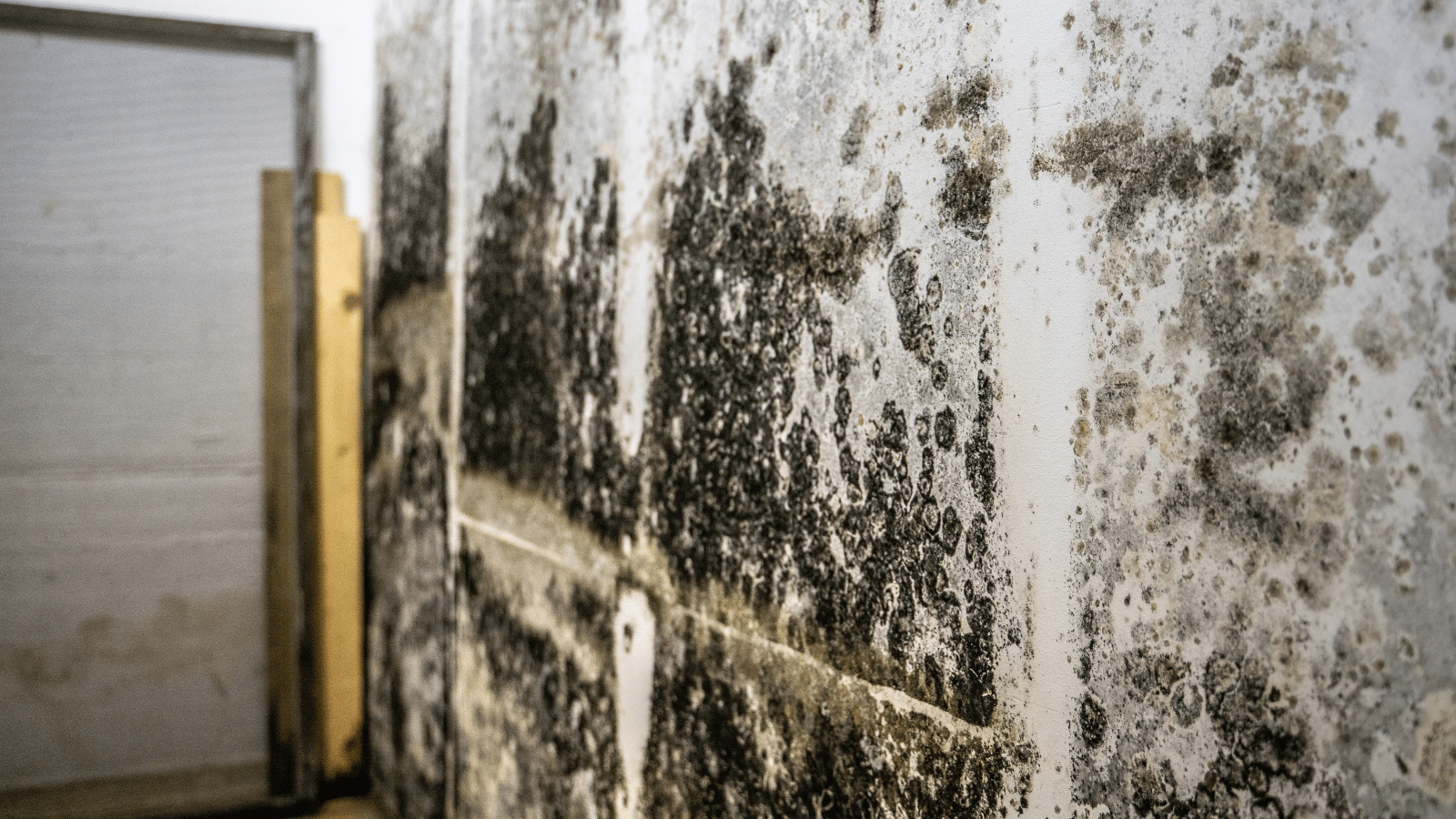
Curious whether a simple home cleaning can really solve a small growth problem or if it only hides the root cause?
Hi, I’m Douglas Ray Whitehead, owner of Array of Solutions. I handle every inquiry personally—no call centers. I founded the company in 2007 and have over 17 years in the Upstate serving Greenville, SC and surrounding area.
This short guide explains when mold remediation with bleach is a safe, effective option for hard, nonporous surfaces. I share clear steps for using bleach, proper mix ratios, contact time, and why ventilation and PPE matter.
Your safety is my future: I focus on least-invasive, reliable solutions that protect indoor air and health. If the affected area is over 10 square feet, call a professional for full assessment and removal. Call me at (864) 710-6413 or email scmoldremoval@gmail.com for a precise, transferable workmanship warranty and a plan that protects your home with minimal disruption.
Key Takeaways
- Use a dilute mix only on hard, nonporous surfaces and follow safety steps.
- I provide clear guidance from field experience in Greenville, SC.
- Proper contact time and rinsing protect materials and health.
- DIY stops being safe once the area exceeds 10 square feet.
- When in doubt, contact Array of Solutions for a direct assessment and warranty-backed work.
Understanding when bleach makes sense for mold—and when it doesn’t
Deciding when a common household cleaner is enough — and when it isn’t — starts with knowing what surface you’re facing during mold removal. On hard, nonporous surfaces like glazed tile, glass, stainless sinks, and bathtubs, a chlorine solution can directly contact growth and be wiped away.
Use bleach sparingly for light, localized spots under 10 square feet. OSHA, EPA, and CDC advise caution; protective gear and good ventilation matter if you choose a DIY route.
- Effective: hard, nonporous surfaces where the solution stays on the surface.
- Not effective: porous surfaces such as wood and drywall — staining may change but growth often remains inside.
- Practical rule: if the area spreads, has a musty odor, or recurs, call Array of Solutions for a professional plan.
- Remember: chlorine-based cleaners are tools, not fixes — control moisture and ventilation to prevent return.
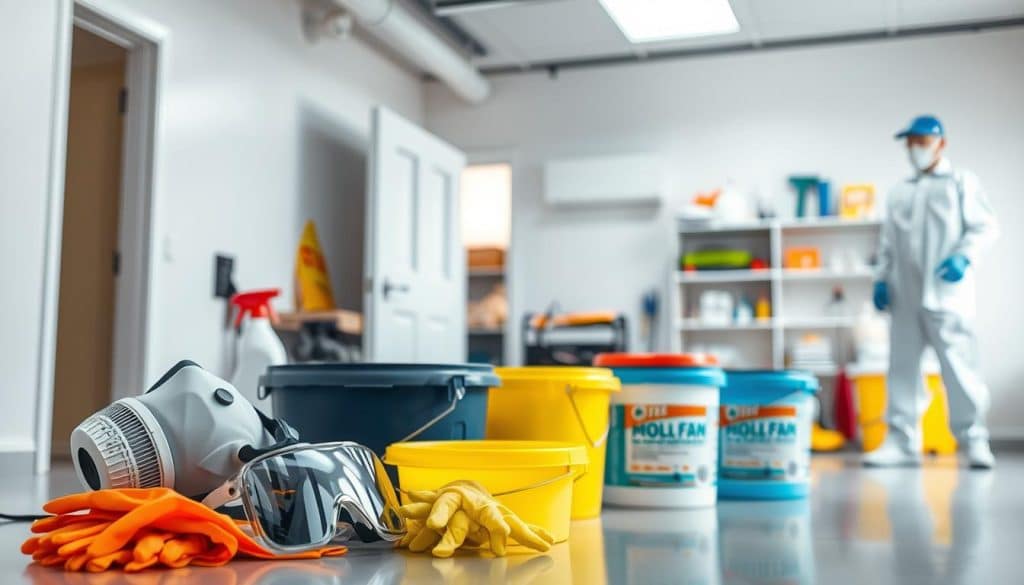
Safety first: protect your health and home before any cleaning
Take a moment to prepare: the right gear and airflow keep cleanup safe. I put safety first at Array of Solutions, so I ask you to plan before you act.
Start with health. Always wear an N95 respirator, chemical‑resistant gloves, and sealed goggles to limit exposure to fumes and splashes that can irritate eyes and skin.
Open windows and run fans to move air outdoors. Good airflow lowers fumes and helps protect family members during short cleanups of hard surfaces.
Size threshold: why growth over 10 sq. ft. needs a professional
Limit DIY to small areas. Larger or recurring spots often signal hidden moisture or spreading spores that need containment and pro equipment.
If the affected area is more than 10 square feet, call a professional for a full assessment and safe removal.
Never mix bleach with ammonia or other cleaners
- Never combine chlorine products and ammonia—dangerous gases form and can cause chest pain, watery eyes, and breathing issues.
- Protect nearby items: move porous materials away before you clean to avoid secondary contamination.
- Keep children and pets out of work areas until surfaces are rinsed and fully dry.
When in doubt, call Array of Solutions. I take calls personally, advise on PPE like N95s and goggles, and recommend an on‑site visit when safety or area size raises concerns. We back our work with a transferable warranty to protect your home and health.
mold remediation with bleach: a step‑by‑step guide for small, hard, nonporous surfaces
Follow this safe, step-by-step method for treating small spots on hard, nonporous surfaces.
Mixing the solution correctly:
Mix the correct ratio
Prepare a precise solution: 1/3 cup chlorine bleach per gallon of water (about 1500 ppm). Pre-clean any visible grime so the solution can contact the surface directly.
Application, contact time, rinse, and dry: the 10‑minute rule
Apply with a sponge, brush, or spray and keep the surface visibly wet for a full 10 minutes. Reapply if the area dries too fast.
Rinse thoroughly with clean water and allow the area to air dry. Open windows and run a fan to speed drying and clear fumes.
Appropriate surfaces vs. off‑limits materials
- Safe: glazed ceramic tile, porcelain, glass, stainless steel, plastic laminate, sealed granite, vinyl, and silicone.
- Avoid: marble, non‑stainless steel, aluminum, chipped porcelain, porous tile, wood, and drywall.
- After use, rinse tools, dispose of leftover solution safely, and store chemicals out of sunlight.
Keep areas small. If the affected area spreads or you find hidden moisture, stop and call Array of Solutions for an on-site evaluation and warranty-backed service.
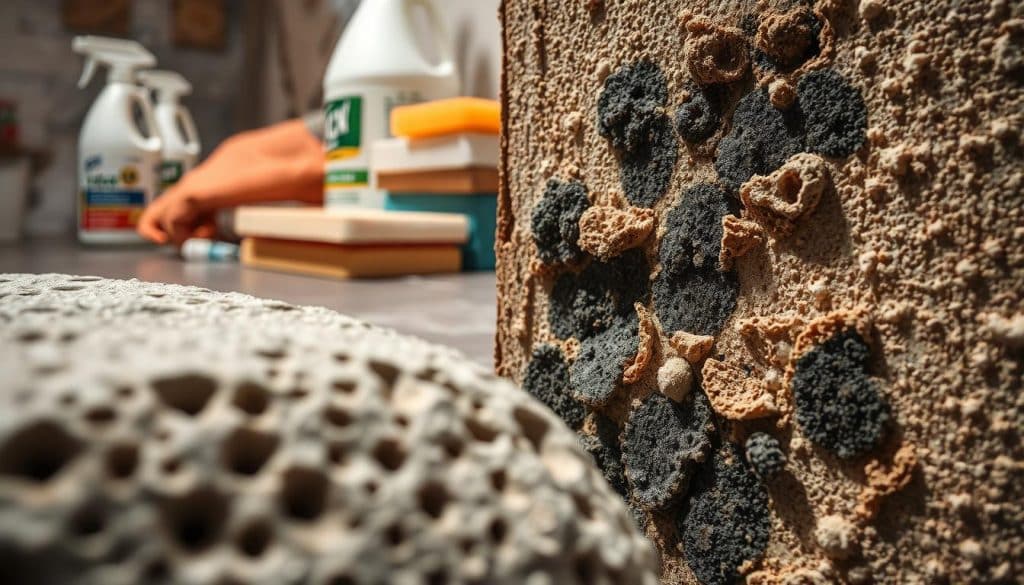
Why bleach may fail on porous materials—and the risks you should know
Surface stains on porous materials can mask deeper problems that topical cleaners won’t fix. Porous surfaces let growth anchor below the finish, so a treated patch can look better while the root remains active.
Porous surfaces and roots: why stains fade but growth returns
On wood and drywall, liquid carries chloride and water into fibers and gaps. The chlorine evaporates fast while moisture soaks in.
That means visible color may fade, yet roots remain inside. Recurrent discoloration or musty smells are signs the issue persists.
Health and structural concerns: fumes, irritation, and corrosion
Bleach is mostly water; repeated use can weaken wood fibers and corrode nearby metals. This creates long‑term structural problems and hidden damage.
Off‑gassing can produce strong fumes that irritate eyes, skin, and lungs. Without good ventilation, occupants face higher irritation risks.
- Typical failure signs: returning stains, soft drywall, or warped wood.
- Best action: stop repeated topical treatments and consider targeted removal.
- Our approach: we identify the source, perform controlled removal, and dry affected areas to stop mold growth.
Safer alternatives to bleach for light mold cleanup
Simple kitchen ingredients often offer effective, low-toxicity ways to tackle light surface growth. We prioritize least‑invasive remedies you can try on small spots and tell you when to stop DIY and call me directly.
Vinegar, baking soda, hydrogen peroxide, and lemon: when and how to use
Vinegar (distilled white) works on many species. Use undiluted, let it sit, then wipe to help clean mold and reduce odors.
- Use undiluted vinegar for light cleanup; allow dwell time before wiping.
- Mix baking soda with water or a splash of vinegar for gentle scouring and deodorizing on hard surfaces.
- Apply hydrogen peroxide to small patches; expect bubbling and wear gloves and goggles.
- Lemon juice (about 5% acid) is good for daily cleaning to discourage growth in kitchens and baths.
Always test a hidden spot for colorfastness. Wipe residues and dry completely; trapped water will undo results.
When to stop: if spots spread, odors persist, or sensitive people react, pause and call Array of Solutions for a safe, on‑site plan.
Preventing mold from coming back: moisture control and maintenance
The best way to stop recurring growth is to manage water and airflow in your home. Quick action after leaks and steady humidity control protect surfaces and indoor air quality.
Our mission is to protect families and businesses by solving moisture at the source. We deliver effective air quality solutions and back them with a transferable warranty.
- Keep indoor humidity under 60% using dehumidifiers and exhaust fans to help prevent mold growth and improve air.
- Dry wet materials within 24–48 hours after spills or leaks; fast drying stops mold spores from colonizing.
- Vent showers, kitchens, and laundry to the outdoors and avoid recirculating humid air inside the home.
- Fix water intrusions—roof, gutter, plumbing, and foundation issues fuel recurring growth on surfaces and in areas.
- Clean and maintain HVAC systems after any event to prevent spreading contamination across surfaces.
Seal or replace damaged caulk and grout at tile transitions, increase air movement in closets and corners, and monitor for damp spots.
If moisture problems persist, schedule an inspection with Array of Solutions. We locate hidden sources, design lasting prevention, and stand behind our work with a transferable warranty.
Talk to Douglas at Array of Solutions for expert, least‑invasive remediation
Getting straight answers and clear next steps starts with a single phone call to a trusted local expert.
Personal service, 17+ years in Upstate SC, and Expert Witness credibility
I am your single point of contact from initial call through job completion. I diagnose the problem, explain the plan, and oversee every step for consistent results.
Contact and service details
- Array of Solutions | (864) 710-6413 | scmoldremoval@gmail.com
- We evaluate source moisture, extent, and materials to choose the least‑invasive strategy that achieves complete removal and safe re‑occupancy.
- Our approach includes targeted containment, safe extraction of impacted materials, air filtration, and validation so spores aren’t redistributed through your home.
- If a small bleach task uncovered a bigger problem, we pivot quickly to professional remediation that resolves the root cause.
- Expect straight talk, evidence‑based recommendations, Expert Witness experience, and a transferable warranty on workmanship.
Your safety is my future. For any area over 10 sq. ft. or when porous materials are involved, call for a professional assessment and a lasting solution.
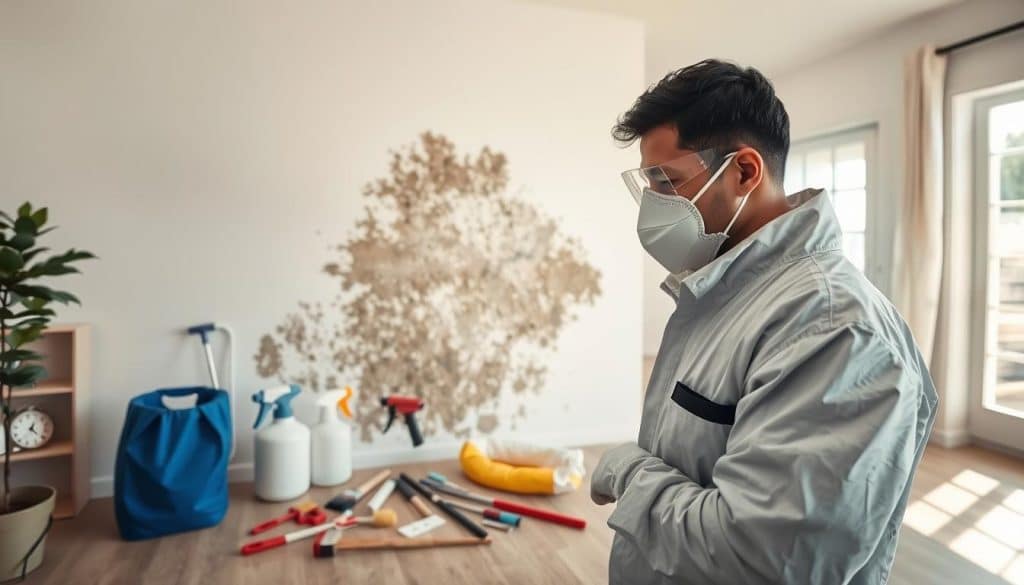
Conclusion
Small, visible spots on hard finishes may be treated safely at home when done properly.
To kill mold in a tiny area, limit use to hard, nonporous surfaces. Measure accurately: 1/3 cup of chlorine bleach per gallon of water and keep the surface wet for 10 minutes. Rinse and dry well to reduce fumes and exposure.
Remember that topical cleaning often only affects the surface. Porous materials like wood or drywall hide roots that can cause recurring growth. Never mix bleach and ammonia; protect eyes and skin and use good ventilation.
If spots return or the area is larger than 10 sq. ft., call Array of Solutions. I’ll respond personally, help eliminate mold at the source, and provide a warranty. Call (864) 710-6413 or email scmoldremoval@gmail.com for a prompt, expert plan in the Upstate.