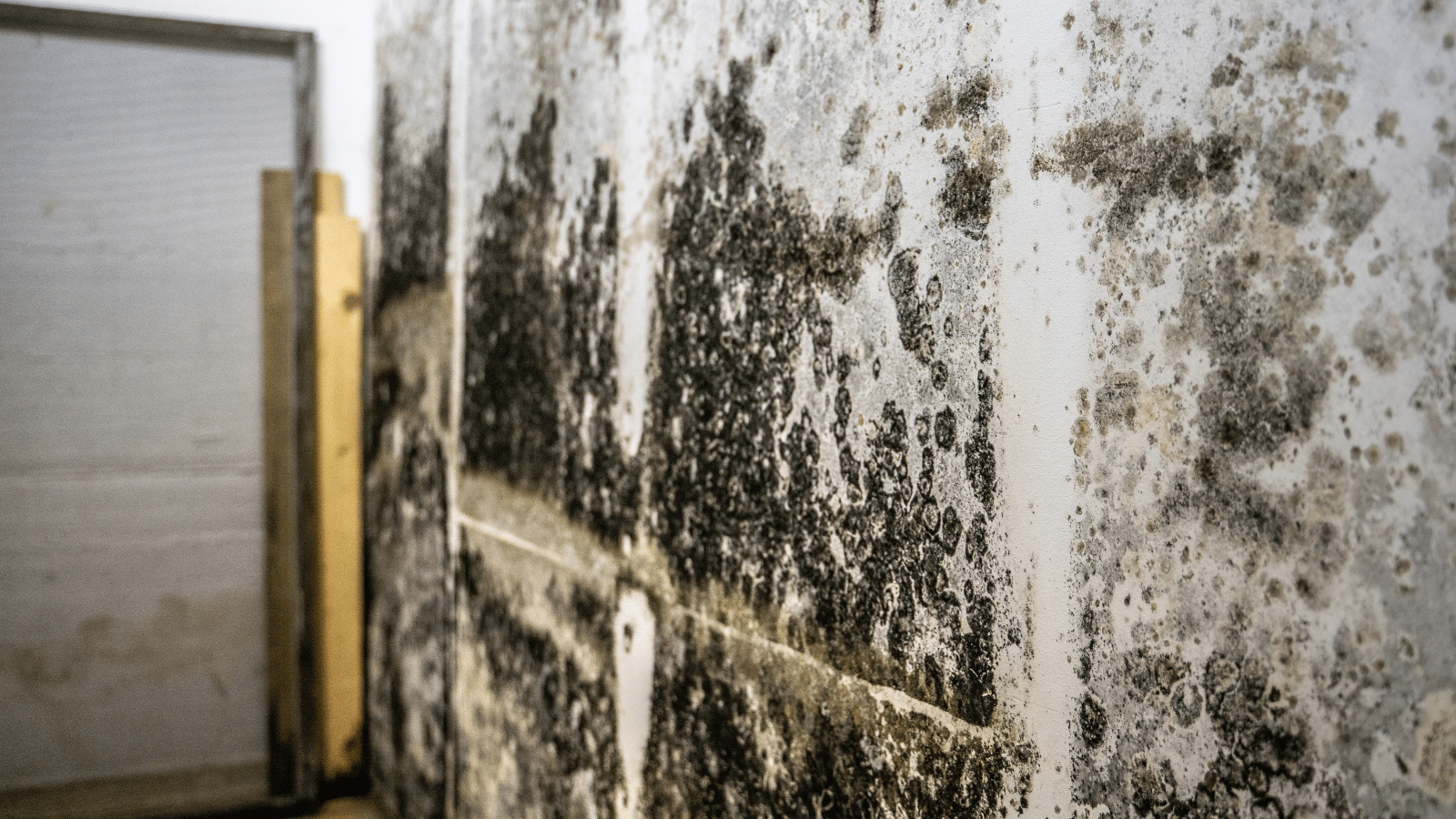
Curious why some yards never flood while others face standing water after every storm?
At Array of Solutions I’ve seen the same problem across Greenville: poor drainage that leads to mold, musty odors, and structural damage. With over 20 years in the Upstate and thousands of inspections, I share practical, safety-first guidance you can trust.
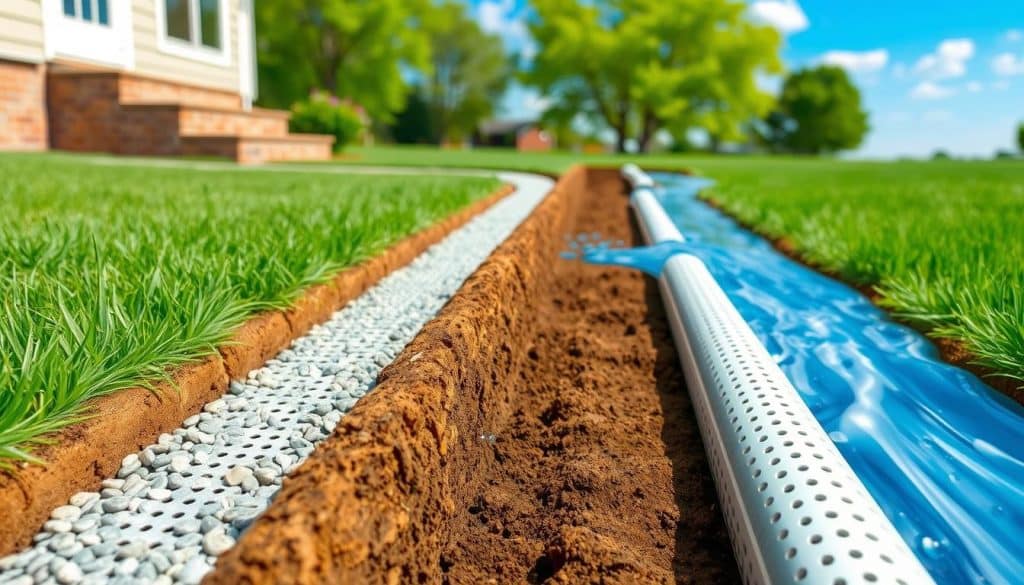
A french drain is a simple, gravity-driven system — a trench, gravel, geotextile fabric, and a perforated pipe that moves water away from your home and landscape. Proper slope and stone selection are key for reliable flow and long life.
My approach mixes conservative field experience with clear options for homeowners, explaining how to install a french drain, what components matter, when this system outperforms surface fixes, and when bringing in an expert makes sense. If you prefer direct help, I handle every call personally at Array of Solutions.
Contact me at (864) 710-6413 or scmoldremoval@gmail.com to get a written scope, timeline, and answers from one trusted point of contact.
Key Takeaways
- French drains move water away using gravity and simple materials.
- Slope, fabric, and washed stone are critical for long-term performance.
- Correct planning prevents new problems elsewhere on the property.
- Addressing drainage early reduces mold and home damage risks.
- For complex sites, consult an expert who stands behind workmanship.
Why French drains matter for drainage, water damage prevention, and mold control
Persistent damp spots and musty smells often signal a hidden drainage problem beneath your yard. A properly placed french drain collects water along its length and moves it away from vulnerable areas like basements, crawlspaces, patios, and a home foundation.
Gravity does the work when the trench keeps a slight slope. Using non-woven fabric and washed stone keeps fines out and maintains long-term flow. That reduces hydrostatic pressure and stops excess water before it reaches interior spaces.
- Reduces pressure: intercepts subsurface and surface water before seepage.
- Protects finishes: limits standing water that harms patios, grout, and landscaping.
- Improves air quality: limits chronic moisture that fuels mold on wood and drywall.
For clay soils or wide wet areas, this method outperforms a single surface inlet. We design solutions that are least invasive and back workmanship with a transferable warranty. Call (864) 710-6413 or email scmoldremoval@gmail.com for a personal assessment with an expert.
Where a French drain works best and when to choose one over other systems
Many properties show puddles along low lines or near walls long after the rain stops. That pattern signals areas where a linear collection system outperforms spot fixes. We’ve helped Upstate homeowners since 2007 and I personally evaluate each site before recommending work.
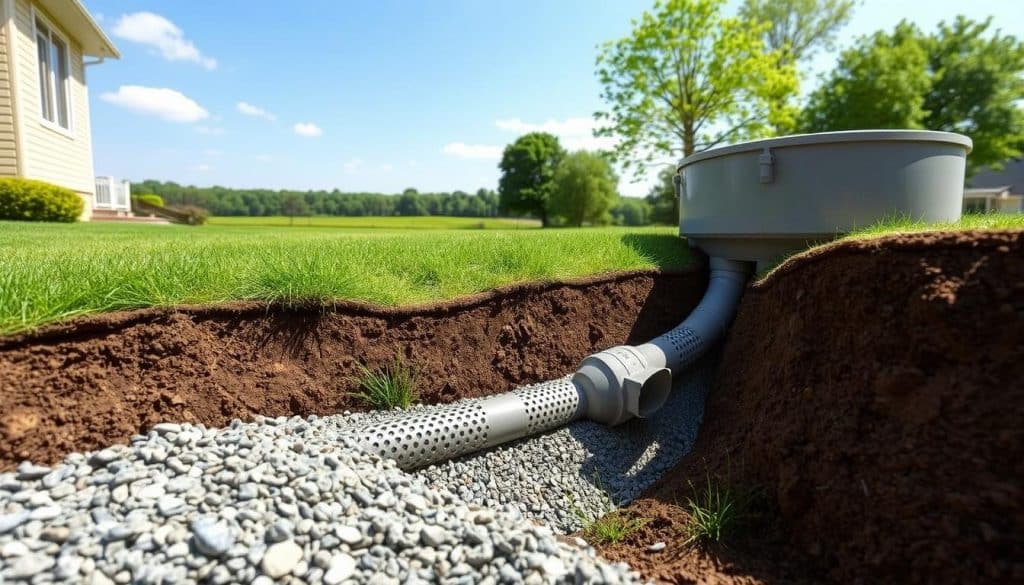
Common zones include soggy lawn swales, strips beside a foundation, under downspouts with a catch basin, and behind retaining walls. In these locations, continuous piping and stone collect water along a line instead of at a single point.
When this system beats surface options: choose a linear approach if standing water lingers for hours or days, if soil stays saturated, or if seepage threatens a basement or crawlspace. For retaining walls, a line relieves hydrostatic pressure and protects finishes.
- Select a discharge point with enough fall to keep flow and avoid sending water onto neighbors.
- Check depth and alignment where roots, utilities, or hardscape limit routing choices.
- Pair with catch basins when downspouts need a transition from surface to subsurface flow.
Greenville’s clay soils and varied topography often make a subsurface system the least invasive, longest-lasting choice for landscape drainage. If your yard shows repeat puddling, call Array of Solutions for an on-site assessment and tailored plan.
Plan before you dig: slope, codes, frost line, and safety
A few preparatory steps make the trench work safe, legal, and long-lasting. Safety and compliance come first at Array of Solutions, and I personally verify permits, HOA rules, and local building codes before work begins.
Call 811 so underground utilities get marked before you dig trench routes. Hitting gas, power, or telecom lines risks injury and costly repairs. We always confirm marks and plan routes that avoid known utilities.
Most installers use a 1% slope—about 1 inch of drop per 8 feet—so gravity carries water from the collection point to the discharge point. Some sites need a steeper grade; we measure grade with stakes, string, and a level and check drop in inches per linear feet.
- Account for frost line and local depth requirements; colder regions need deeper trenches for stable performance.
- Route around tree roots, hardscape, and utilities; choose an outlet that is legal and accessible for maintenance.
- Pick a favorable time with dry ground when possible, since wet soil raises collapse risk and slows cleanup.
Trench safety matters: avoid unsupported deep cuts in unstable ground and call in professionals when shoring or heavy equipment is needed. If you want a turnkey plan and compliant execution for your home in Greenville, I’ll coordinate design and inspections personally.
Materials and tools you’ll need for a durable drainage system
Selecting the right materials makes the difference between a temporary fix and a long-lasting drainage solution. For most homes we recommend a 4-inch perforated pipe as the standard; it balances flow and ease of handling.
Pipe choices and comparisons
Flexible corrugated pipe routes around obstacles easily. Rigid PVC is crush-resistant and lasts longer under load. EZ-style bundles combine fabric and aggregate for faster placement when access or time is limited.
Fabric and gravel guidance
Use non-woven geotextile fabric that lets water through but blocks fines. Washed, angular gravel sized roughly 3/4 to 1-1/2 inches creates a stable layer and prevents migration into pipe slots. Avoid pea gravel; it moves and clogs.
Trenching tools and extras
- Trencher or shovel, wheelbarrow, and safety gear.
- Level, string line, couplers, tile tape, and catch basins.
- Plan for cleanouts and accessible outlets for future flushing.
We recommend least invasive, proven materials that keep soil out and maintain steady flow. I’m available to review your materials list and suggest upgrades that protect your warranty and reduce service calls.
How to install a french drain step-by-step
Identify the low point in your yard and choose a discharge point with enough fall for reliable flow. Pick a lawful outlet and verify the path won’t send water onto neighboring property or under hardscapes.
Mark the route with stakes and string. Protect turf with plywood and cut sod carefully for later replacement. These steps save time during cleanup and limit disturbance.
- Dig the trench: Aim for 1 to 1.5 feet wide and 1.5 to 2 feet deep unless codes or frost lines require changes. Check slope frequently—about a 1-inch drop per 8 feet.
- Prepare the bedding: Lay non-woven fabric with ~10 inches of overhang. Add a 3-inch layer of washed gravel at the bottom to form a stable base.
- Place the pipe: Set the perforated pipe with holes down. Couple and tape joints, then add gravel up to a few inches below grade. Install catch basins where surface debris enters.
- Test and finish: Run a hose from the high end and confirm steady flow at the outlet. Correct low spots, fold the fabric over the gravel (the burrito method), backfill, and restore with topsoil and replaced sod or landscaping.
We prioritize methods that minimize disturbance and maximize results. If your yard, soil, or access is complex, I can handle the work and stand behind it with our transferable warranty.
Avoid costly mistakes and keep your French drain flowing
A well-planned trench lasts decades; a rushed one invites clogs and collapse. Small errors in slope, fabric, or stone cause most recurring problems. We design for durability with correct slopes, geotextile wraps, and proper stone sizes.
Common errors that shorten system life
- Improper slope: trapped water leads to standing water and backups—check your level often.
- No fabric: without non-woven fabric, fine soil invades gravel and clogs the perforated pipe.
- Wrong gravel: pea gravel migrates; choose washed angular gravel to protect voids and pipe.
- Bad outlet: never send excess water onto neighbors; pick a lawful discharge and stabilize the surface.
Maintenance tips that save time and damage
- Clear catch basins yearly and after heavy storms to keep drains carrying water properly.
- Inspect outlets and exposed pipe ends for erosion or blockages after big rains.
- Flush the drain pipe if flow slows; check the trench for settlement and restore cover if needed.
- If moisture returns near the home foundation, call us—I’ll review inflow sources, soil grades, and pipe capacity.
Conclusion
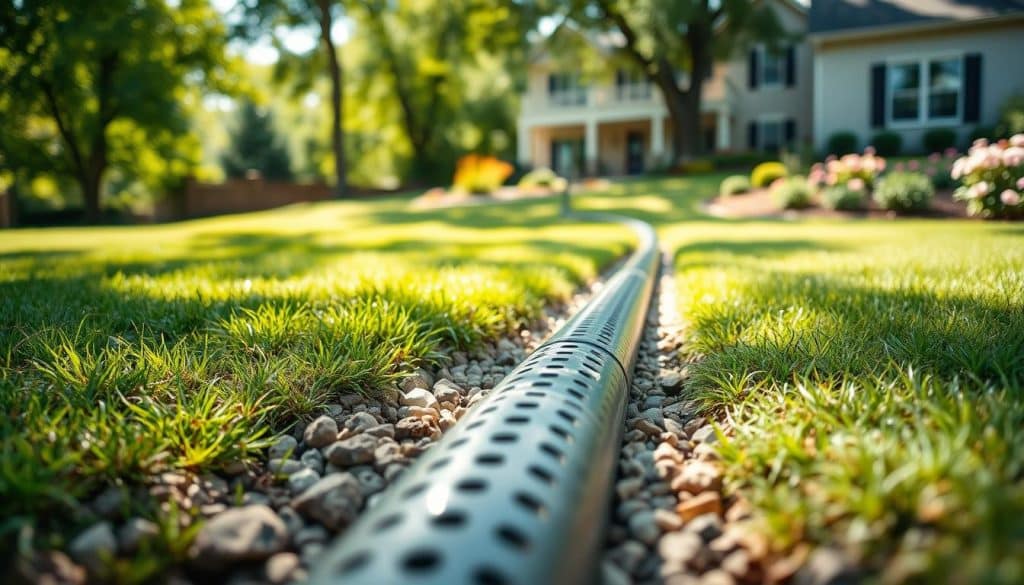
A steady slope, clean stone, and proper fabric form the backbone of a lasting drainage solution.
For most yards a well-built french drain moves water away from the home and protects the home foundation. Typical depth ranges from about 8 inches up to 2 feet, depending on soil and ground conditions. Use washed gravel, non-woven fabric, and correctly sized pipes so the drain pipe stays clear over time.
If your project needs expert layout, limited fall or complex routing, I’ll assess the site personally. I’m Douglas Ray Whitehead of Array of Solutions in Greenville, SC. Call (864) 710-6413 or email scmoldremoval@gmail.com for a fast, hands-on consult and a warrantied plan that blends with your landscape and surface layers.