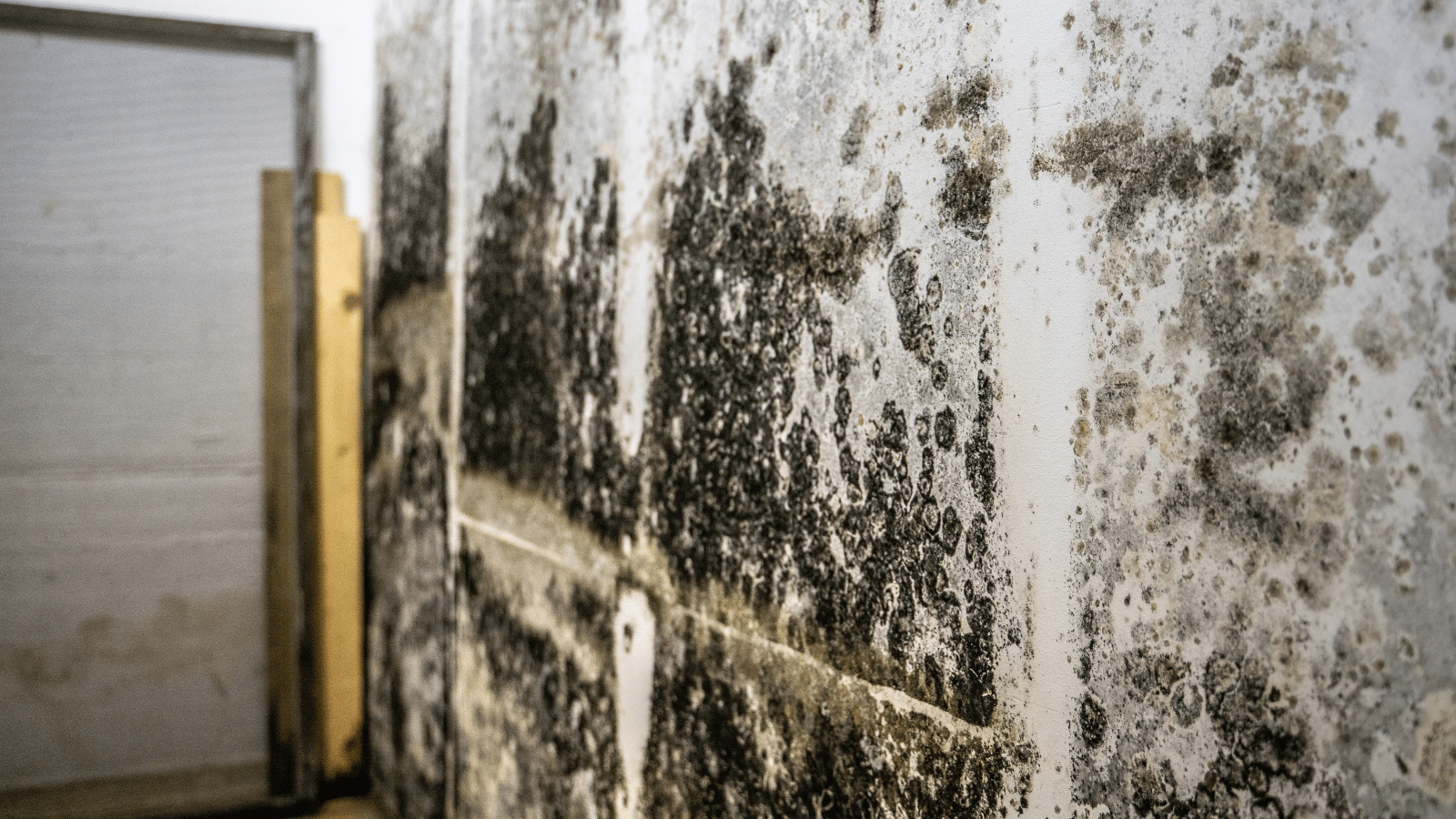
What if you’re wondering how much does crawl space encapsulation cost and whether a simple renovation under your floor could stop moisture, cut energy bills, and protect your home’s structure for years?
On average, homeowners pay about $5,500 for full crawl space encapsulation, with projects ranging from $1,500 to $15,000. Final pricing depends on area size, existing damage, access, and whether a dehumidifier or drainage is needed.
Typical work takes three to five days. Labor often makes up 50–70% of the total, while materials account for 30–50%. Permits and inspections usually add about $100–$250 to the bill.
At Array of Solutions in Greenville, SC, I guide every client from inspection to warranty. My approach is the least invasive option that delivers lasting results, improves indoor air quality, and protects floor framing and foundation.
Call me at (864) 710-6413 or email scmoldremoval@gmail.com for a precise, transferable workmanship warranty and a plan that protects your home with minimal disruption.
Key Takeaways
- Average project: roughly $5,500 nationally, with wide variation.
- Labor often accounts for the biggest share of the investment.
- Encapsulation can reduce moisture, improve air quality, and protect framing.
- Expect a 3–5 day timeline and modest permit fees for inspections.
- Contact Douglas Ray Whitehead at Array of Solutions for a personal estimate: (864) 710-6413.
Quick Answer: Average Crawl Space Encapsulation Costs and What Drives the Price
A clear price snapshot helps homeowners decide whether to invest in a lasting moisture barrier under their floors.
Nationally, most projects run between $1,500 and $15,000, with an average near $5,500. Simple installs typically fall in the low per square foot range. More complex jobs with heavy moisture or drainage needs push pricing higher.
Per square foot rates usually start around $3–$7 per square foot. Expect figures to approach $10 per foot when extensive remediation, dehumidifiers, or drainage upgrades are required.
- Labor share: often 50%–70% of the total.
- Permits & inspections: commonly $100–$250.
- Timeline: most homes take three to five days.
Per square pricing typically covers prep, a continuous liner, wall coverage, seam sealing, and vent closure. We itemize bids so per square numbers are easy to compare and transparent.
If you want a precise, warranty-backed estimate, I’ll inspect your property and outline a right-sized plan. Call me, Douglas, at (864) 710-6413 for a detailed quote.
How much does crawl space encapsulation cost: Key Factors That Affect Your Final Price
Price for sealing and protecting the area beneath your home varies with a few practical factors you can control.
Size and access drive labor and material needs. Larger areas need more liner, tape, and time. Tight access or low clearances adds labor and raises the final price.
Current condition: moisture, mold, and structural repairs
Active moisture or visible mold requires remediation before we seal. Drainage fixes and moderate foundation repairs often add thousands to the estimate.
Labor vs. materials and permits
Labor typically makes up 50%–70% of the bill; materials account for the rest. Choosing thicker liners or better tapes raises durability and value.
- Permits and inspections usually run about $100–$250 and ensure code compliance.
- I’ll evaluate size, access points, and safety first, then share a plan that limits disruption.
- You’ll get a clear scope linking size, condition, labor, and inspection to the final price.
Per Square Foot Pricing Explained for Crawl Spaces
A clear per-square breakdown helps you see what’s truly included and where extras appear on a bid. That makes comparing offers simple and keeps surprises off the final invoice.
Basic encapsulation: $3–$7 per square foot
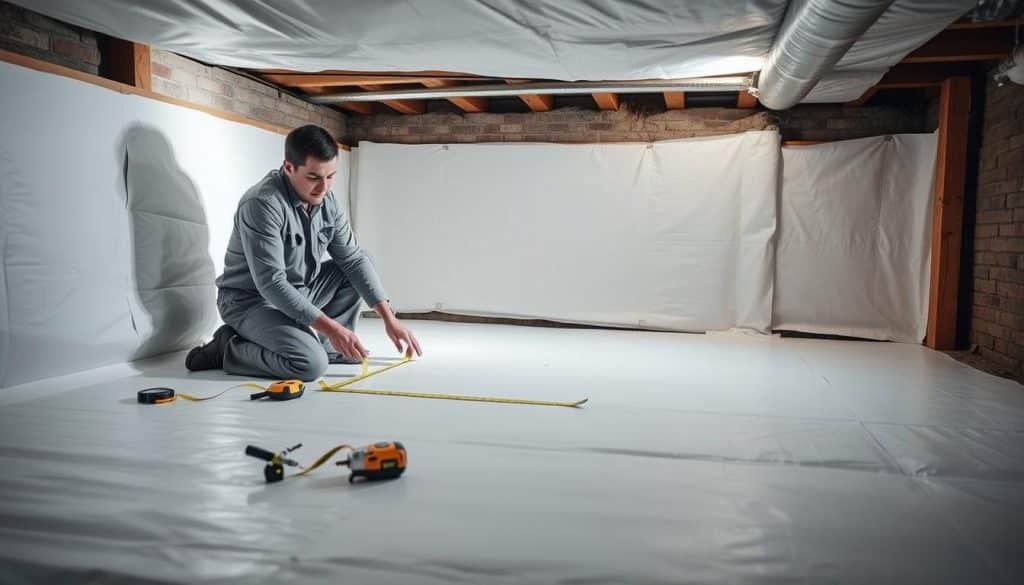
Basic per square foot pricing usually covers ground prep, a continuous liner, taped seams, wall coverage, and vent sealing. This level fits most dry, accessible areas.
When prices climb toward $10 per square foot
Figures approach $10 per square foot when heavy cleaning, debris removal, drainage upgrades, thicker liners, or added dehumidification are required.
- A true per square figure should include ground prep, taped seams, wall coverage, vent sealing, and clean transitions around piers.
- Costs trend higher for tight access, major debris removal, or structural corrections before sealing.
- We’ll show how size and access affect labor hours so your per square is based on real site conditions.
Next steps: With an accurate square foot measurement and photos, I can give a reliable range before we finalize on-site. We aim to protect your home without inflating the price.
Materials Breakdown: Vapor Barriers, Insulation, and Sealing Components
The right combination of liners, tapes, and insulation determines long-term performance beneath your home.
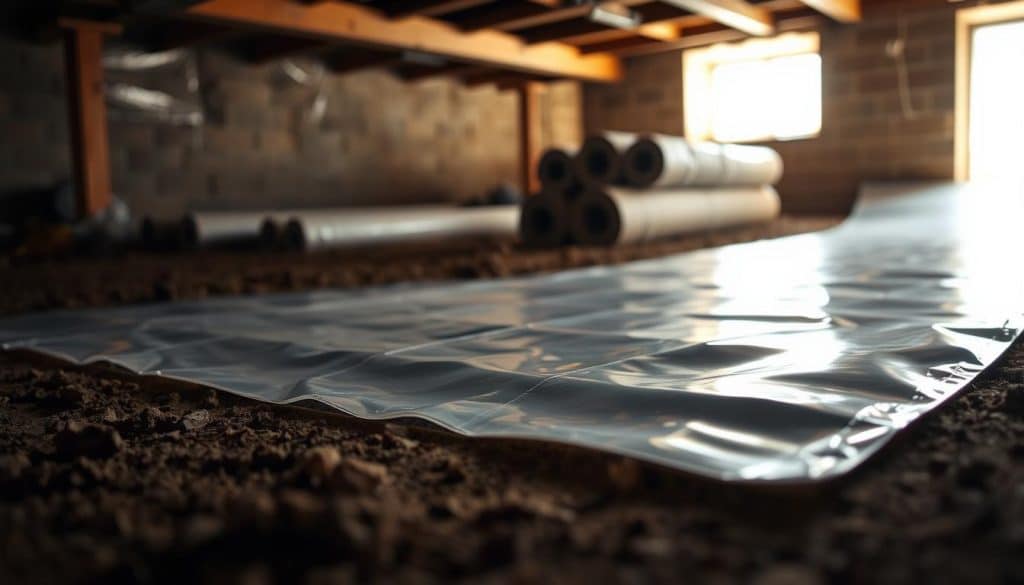
Vapor barriers are sized by thickness. Common options range from 6 mil for low-traffic areas to 20 mil or thicker where durability matters. Thicker liners resist tears and often cost about $0.30–$0.70+ per square foot.
Insulation options and material choices
Insulation choices affect walls and floor performance. Fiberglass batts run roughly $0.60–$1.10 per square foot and fit some budgets.
Spray foam typically costs $1.00–$3.50 per square foot and seals gaps well. Rigid foam board sits around $2.50–$3.00 per square foot, with some specs up to $4.50 for high-performance panels.
Dehumidifiers and sealing components
A dehumidifier plus wiring and discharge work generally falls between $800 and $2,800. Vent covers often cost $10–$22 each; access doors are usually $60–$150.
- Match barrier thickness to use: walk paths get heavier liners.
- Continuous liner and taped seams create a true vapor control system.
- Choose insulation by climate and moisture risk; rigid foam resists mold best.
- Use compatible tapes and caulks for lasting seals to walls and piers.
I’ll itemize every material so you see unit prices and why each product fits your goals. Our workmanship is backed by a transferable warranty, and I’ll review the full material list before we start.
Common Add‑Ons That Influence Encapsulation Cost
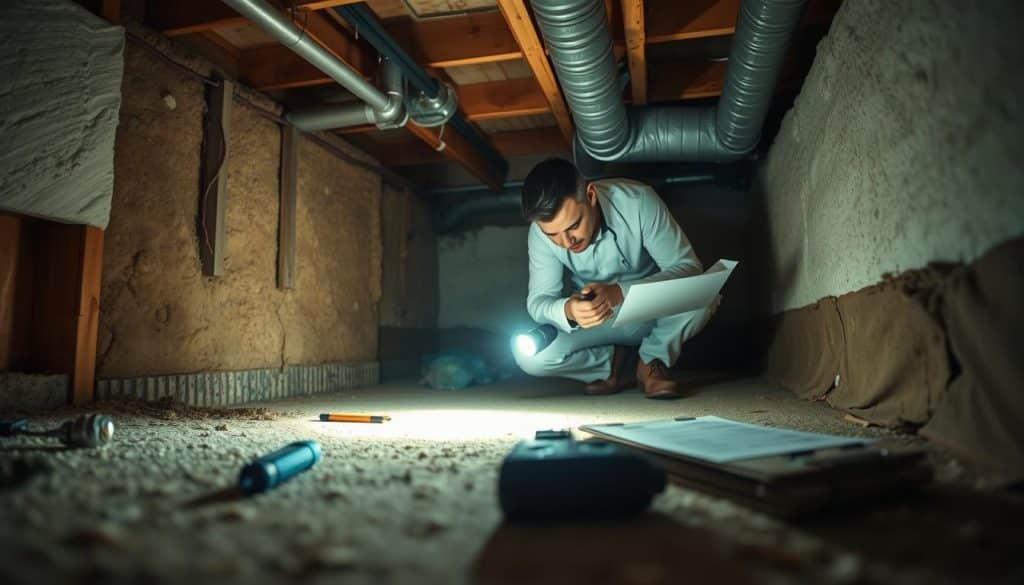
Many projects need extra work beyond a basic liner to address hidden moisture, pests, or air quality risks.
Drainage upgrades like French drains or a sump pump are common. Expect typical ranges of $600–$1,800, with sump pumps often priced between $650–$1,800. If water intrusion is active, we recommend drainage first so sealing won’t trap moisture and harm your foundation or framing.
When mold or asbestos are present
Mold remediation often runs from $500 to $4,000, or about $15–$30 per square foot depending on severity. If asbestos is suspected, we pause and plan safe, compliant removal before any barrier goes in.
Pest control and termite barriers
Pest treatments vary widely—from small jobs at roughly $200 to extensive termite work up to $4,000 with repairs. After treatment, continuous barriers and sealed penetrations reduce reentry risk.
HVAC, ductwork, and dehumidifiers
Targeted duct sealing or rerouting can stop the HVAC system from pulling unconditioned air through gaps. Duct updates usually fall between $450 and $2,000. A properly sized dehumidifier stabilizes conditions and protects finishes and insulation; we include that option when moisture monitoring shows it’s needed.
- Priority: fix active water paths before sealing.
- Safety: follow remediation protocols for mold and asbestos.
- Value: each add-on should match the site’s issues, not upsell without cause.
As an expert witness and former home inspector, I coordinate remediation and drainage so the project solves root problems and protects indoor air. We’ll explain how each add-on affects both price and long‑term performance for your crawl space.
Labor, Timeline, Permits, and Inspections
Scheduling and clear permits keep projects on track and homeowners informed from start to finish. I plan work to respect your household, keep the job tidy, and send daily updates so you always know progress.
Typical labor window
Most homes finish in three to five days. Labor usually makes up 50%–70% of total costs because the process needs careful prep, seam sealing, and verification.
Permit and inspection fees
Permits commonly run about $100–$250 and include a final inspection to confirm code compliance. I secure permits before work begins so the scope matches local rules and avoids rework.
- Clear start date: daily progress updates and a trained crew for confined areas.
- Site care: we protect access points and leave the area clean each day.
- Documentation: photos of any found repairs, final inspection records, and warranty paperwork at completion.
You will have a single point of contact—me—for scheduling, questions, and approvals. This reduces delays and helps final inspections pass the first time.
Value Beyond the Price Tag: Benefits of Encapsulating Crawl Spaces
A dry, sealed area under your home transforms indoor comfort and limits the need for future repairs. Crawl space encapsulation does more than stop visible problems — it protects structure, reduces long-term damage, and supports healthier living conditions.
Reduced humidity, mold risk, and pest intrusion
Controlling humidity removes the conditions mold needs to grow. That cuts musty odors and allergy triggers inside living areas.
Sealing the soil and closing gaps also reduces pest attraction, so you see fewer insects and less damage to framing and insulation.
Energy savings, comfort, and potential resale value
A sealed, insulated underfloor stabilizes temperatures and improves energy performance. Rooms feel more comfortable year‑round and HVAC systems run less to maintain setpoints.
Well-documented work with a transferable warranty can boost resale appeal and reassure buyers about foundation and subfloor condition.
Air quality improvements inside the home
Cleaner air follows when the underfloor environment stays dry and sealed. Homes with ducts in the crawl often notice the biggest gains in air quality.
- Lower humidity limits mold and odor.
- Seals protect the foundation and framing from moisture damage.
- Targeted insulation and a balanced system deliver consistent results.
I’ll explain realistic gains for your property so you can choose solutions that match your goals: comfort, efficiency, and peace of mind.
DIY vs. Professional Encapsulation: Costs, Risks, and Warranties
Deciding between a DIY barrier and a pro installation starts with honest risk assessment and realistic expectations.
Some homeowners with tools and experience can handle sections of the work. Simple liner installs and basic sealing are doable for a careful DIYer.
Why professionals usually win:
- Missed seams or wrong tapes let moisture bypass the liner and create hidden rot or odors.
- Trapping water under plastic is a real risk without proper drainage, drying, and a formal inspection.
- Local permits often apply; a licensed crew handles paperwork and code compliance for one clear price.
- Pros deliver a cohesive system — liner, seals, insulation, and dehumidifier — plus a transferable warranty.
I respect handy homeowners and will explain steps if you want to try. Still, my experience as a former inspector shows that professional work reduces rework, protects health, and preserves property value.
Local Expertise You Can Trust in the Upstate: Array of Solutions
Owner-led service and local knowledge matter when protecting the area beneath your floors. I’ve lived in the Upstate for over 20 years and started Array of Solutions in 2007. You work with me from your first call to the final walkthrough.
Handled personally by Douglas Ray Whitehead
I bring 17+ years of field experience, expert witness work, and a focus on real outcomes. I assess your crawl space and design a plan that limits disruption while protecting framing and foundation.
Least invasive, most effective solutions
We prioritize clean wall terminations, tight seams, and compatible materials. If mold is present, we remediate first and then complete space encapsulation so results last.
Contact and assurance
Owner-level attention: you get clear scopes, timelines, and photos before, during, and after work. Typical timelines are three to five days with permits and inspections coordinated by us.
- Personal assessment and a tailored plan for your crawl or low-clearance areas.
- Insulation specified only where it improves comfort and efficiency.
- A transferable workmanship warranty backs our system and workmanship.
Call (864) 710-6413 or email scmoldremoval@gmail.com to schedule a thorough inspection. No salespeople—just expert guidance from me to protect your home and improve air quality.
Conclusion
A focused inspection and transparent estimate let you protect your foundation without guesswork.
Expect an average near $5,500 with a typical range of $1,500–$15,000 and common per square foot figures of $3–$7. Labor often makes up 50–70% of final costs, while permits usually add $100–$250.
Choose thicker vapor barrier, better tapes, and proper insulation to improve durability and energy savings. When needed, a sized dehumidifier and drainage fixes prevent trapped moisture and future damage.
I’ll personally answer questions, perform an on-site inspection, and provide a line-by-line estimate with a transferable workmanship warranty. Call Array of Solutions at (864) 710-6413 or email scmoldremoval@gmail.com to schedule your assessment.
FAQ
What is the typical price range for encapsulating a crawl space?
Nationally, projects run roughly between $1,500 and $15,000, with a common average near $5,500. The wide range reflects differences in size, condition, materials, and added work such as drainage or mold remediation.
How does per square foot pricing work for encapsulation?
Basic installations often fall between $3 and $7 per square foot. Simple jobs with easy access and standard vapor barriers sit at the low end; complex jobs with thick barriers, insulation, and repairs can approach $10 per square foot.
Which factors most affect the final invoice?
Key drivers include the area and accessibility, existing moisture or mold issues, required structural or repair work, and local permit or inspection needs. Labor usually makes up about 50%–70% of the total, with materials covering the remainder.
What material choices change pricing?
Vapor barrier thickness ranges from about 6 to 20+ mil and costs roughly $0.30–$0.70+ per square foot. Insulation choices—fiberglass, rigid board, or spray foam—add roughly $0.60–$4.50 per square foot depending on type and R-value. Quality tapes, sealants, and penetrations sealing also affect cost.
When will costs increase toward the higher end per square foot?
Prices rise when you need heavy-duty barriers, spray foam, major moisture control (French drains, sump pumps), mold or asbestos remediation, or extensive crawl-space repairs. Tight access or low clearance that slows labor also raises price.
Are dehumidifiers included and how much do they add?
Dedicated crawl-space dehumidifiers are often an add-on. A quality unit plus installation can range from a few hundred to over a thousand dollars, depending on capacity, drainage setup, and warranty.
What common add-ons should homeowners budget for?
Expect potential extra costs for French drains, sump pumps, mold remediation, pest and termite barriers, and HVAC/ductwork modifications to protect indoor air. Each can add several hundred to several thousand dollars depending on scope.
How long does a professional job typically take?
Most professional installations finish within three to five days for standard homes. Extensive remediation or structural repairs extend the timeline accordingly.
Do I need permits or inspections?
Local codes can require permits and inspections. Permit fees vary by jurisdiction. Your contractor should advise and secure any needed approvals to ensure code compliance and maintain warranties.
What are the main benefits that justify the investment?
Proper encapsulation reduces humidity, lowers mold and pest risk, improves indoor air quality, and can increase comfort and energy efficiency. These improvements often protect the foundation and can boost resale appeal.
Can I do this as a DIY project?
DIY is possible for small, straightforward spaces with no mold or structural issues, but risks include trapping moisture, incorrect sealing, and voided warranties. Professional work reduces those risks and ensures code compliance.
Why hire Array of Solutions in Greenville, SC?
We bring local experience and a focus on lasting, least-invasive solutions for moisture, mold, and indoor air quality. We provide inspections, clear pricing, and transferable warranties backed by proven methods.
How can I get an inspection or estimate?
Call (864) 710-6413 or email scmoldremoval@gmail.com to schedule a thorough inspection and personalized estimate for your home or business in the Upstate.